Most homeowners want bottled-water quality at every tap, not just under the sink. Here’s how whole home RO works, where it struggles, and why Reactive Osmosis (RO2) is how we install it in Arundel.
What is a whole house reverse osmosis system in Arundel?
A whole house reverse osmosis system treats water at the main line, so every fixture gets purified water—kitchen, baths, laundry, ice maker and spigots.
Why traditional whole house RO is hard to live with in Arundel
A true reverse osmosis membrane produces water slowly and under pressure, so a whole house RO system has to bank it: a large pressurized storage tank, a booster pump to refill it, and a brine line that sends a significant share of your incoming water to the drain. Run two showers and the dishwasher at once and you can outrun the tank. The equipment footprint, the wasted water and the pump are the three reasons most Arundel homeowners abandon the idea.
How Reactive Osmosis (RO2) is different for Arundel homes
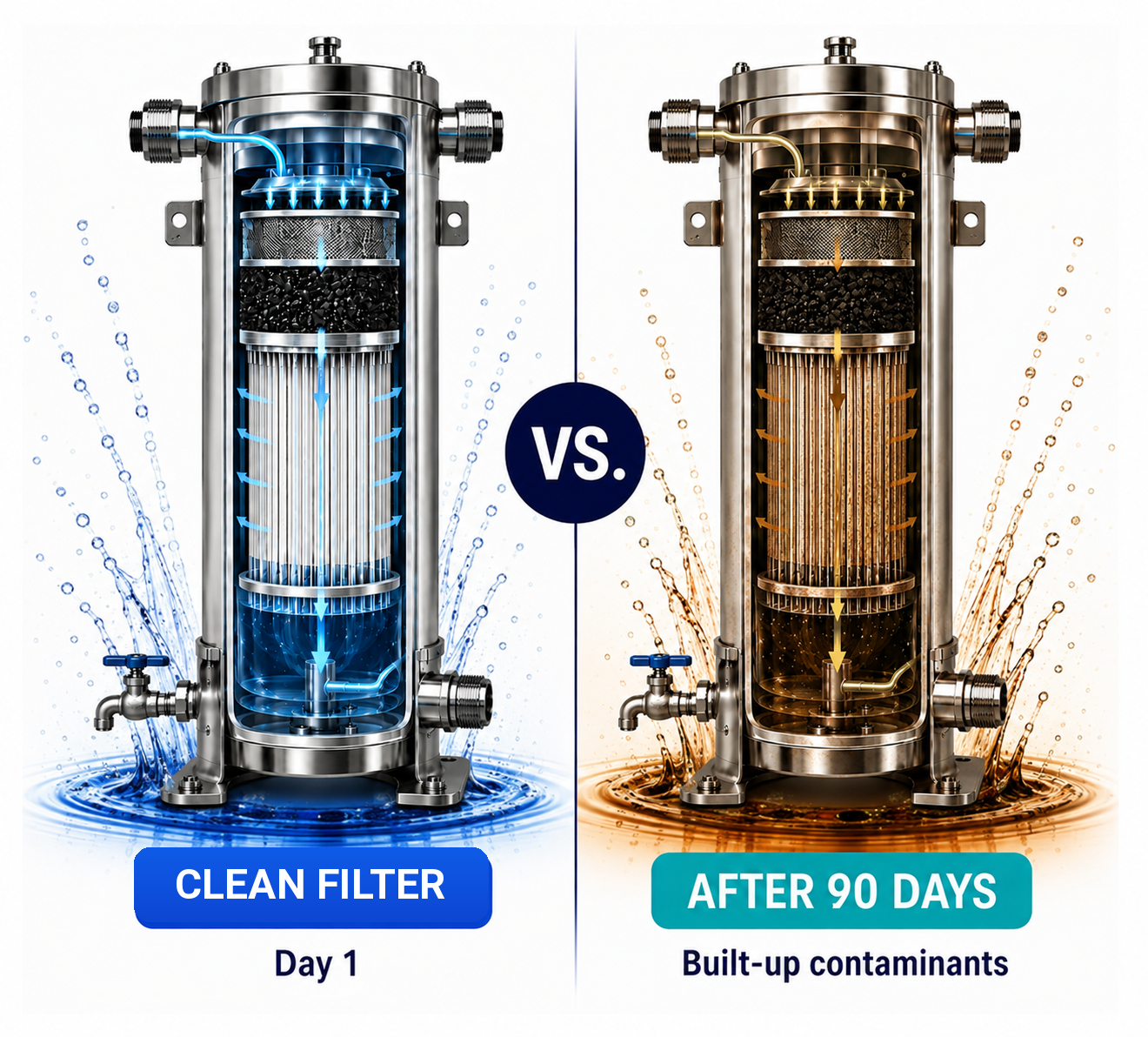
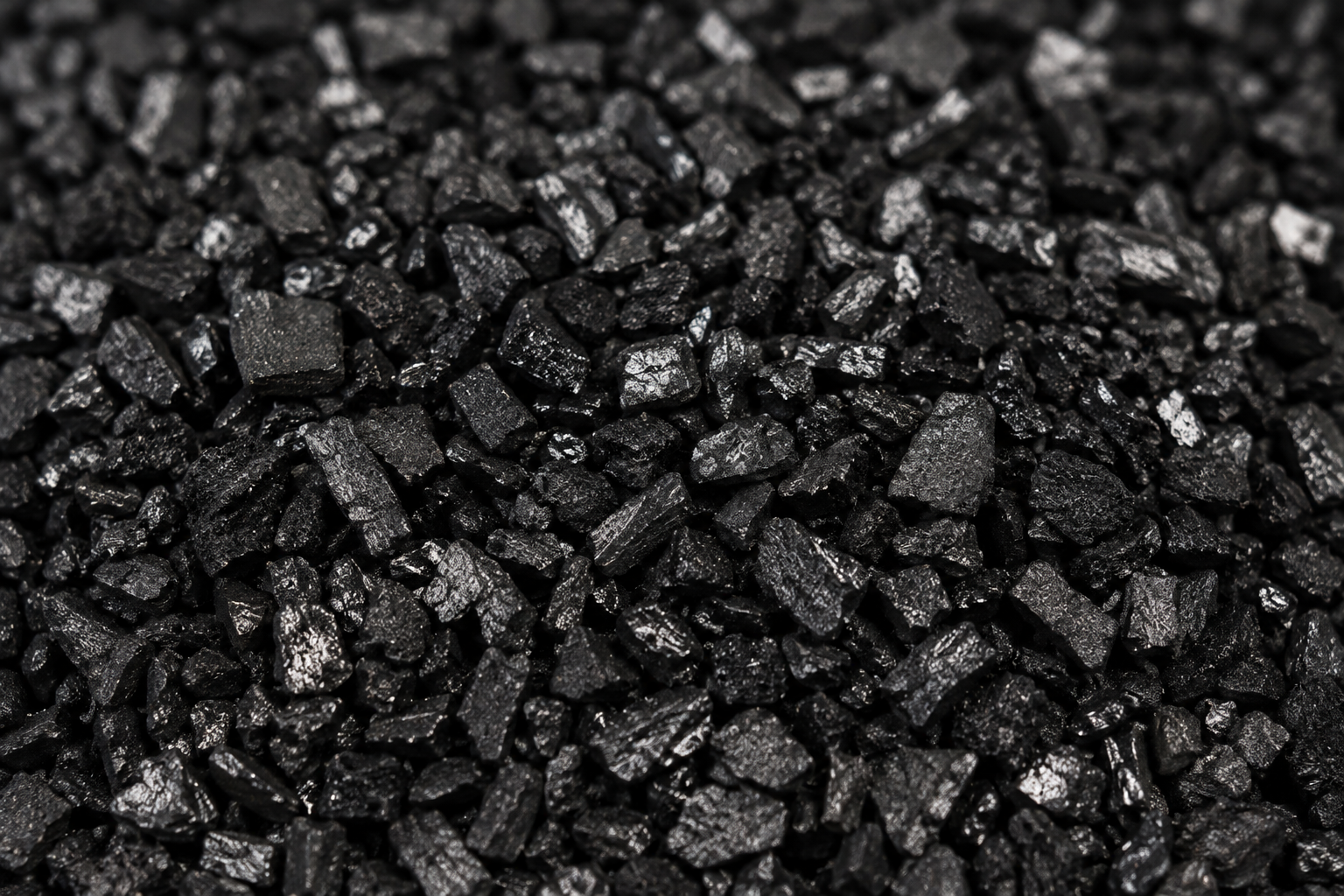
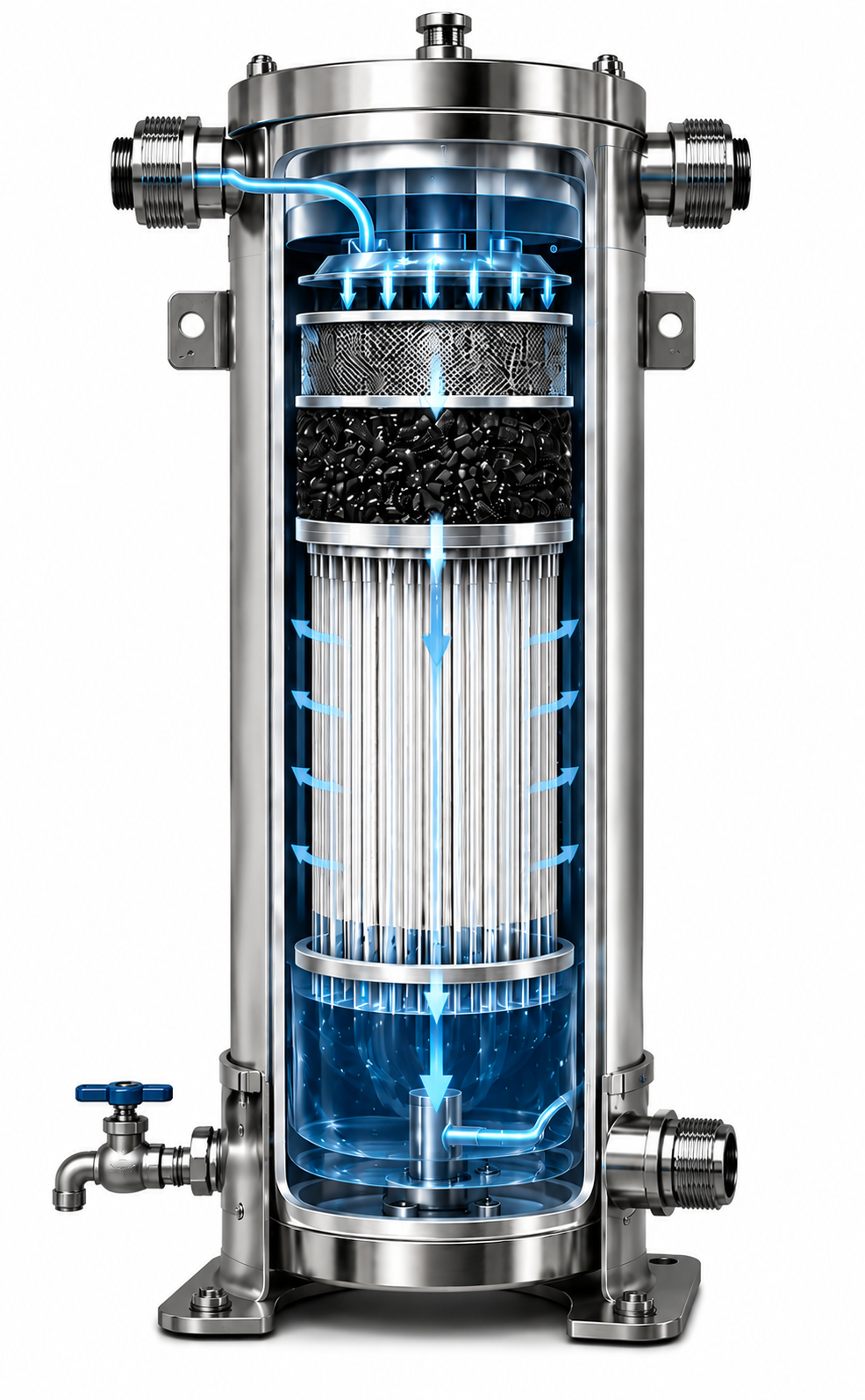
Reactive Osmosis reaches reverse osmosis quality water by filtration rather than by pressurized rejection. Multi-stage media—a 5-micron sediment pre-filter, KDF-55 copper-zinc redox alloy and a 0.5-micron carbon block—handle sediment, chlorine, heavy metals, VOCs, taste and odor often associated with Florida groundwater sources. A hollow-fiber membrane with pores at or under 0.01 microns then blocks bacteria, cysts, colloids, microplastics and many viruses outright. No storage tank, no booster pump, no brine line, and 15 gallons per minute on demand.
Does whole house RO remove fluoride, chlorine and heavy metals in Arundel, FL?
Chlorine, chloramine byproducts, hydrogen sulfide, VOCs, pesticides and dissolved heavy metals such as lead, mercury, nickel and chromium are handled by the KDF-55 and carbon stages. Bacteria, cysts, microplastics, turbidity and fine suspended solids are blocked by the membrane. Dissolved salts and TDS are the honest exception—lowering those takes a true RO membrane, which is the tradeoff you make in exchange for losing the tank, the pump and the brine.
How much does a whole house reverse osmosis system cost in Arundel?
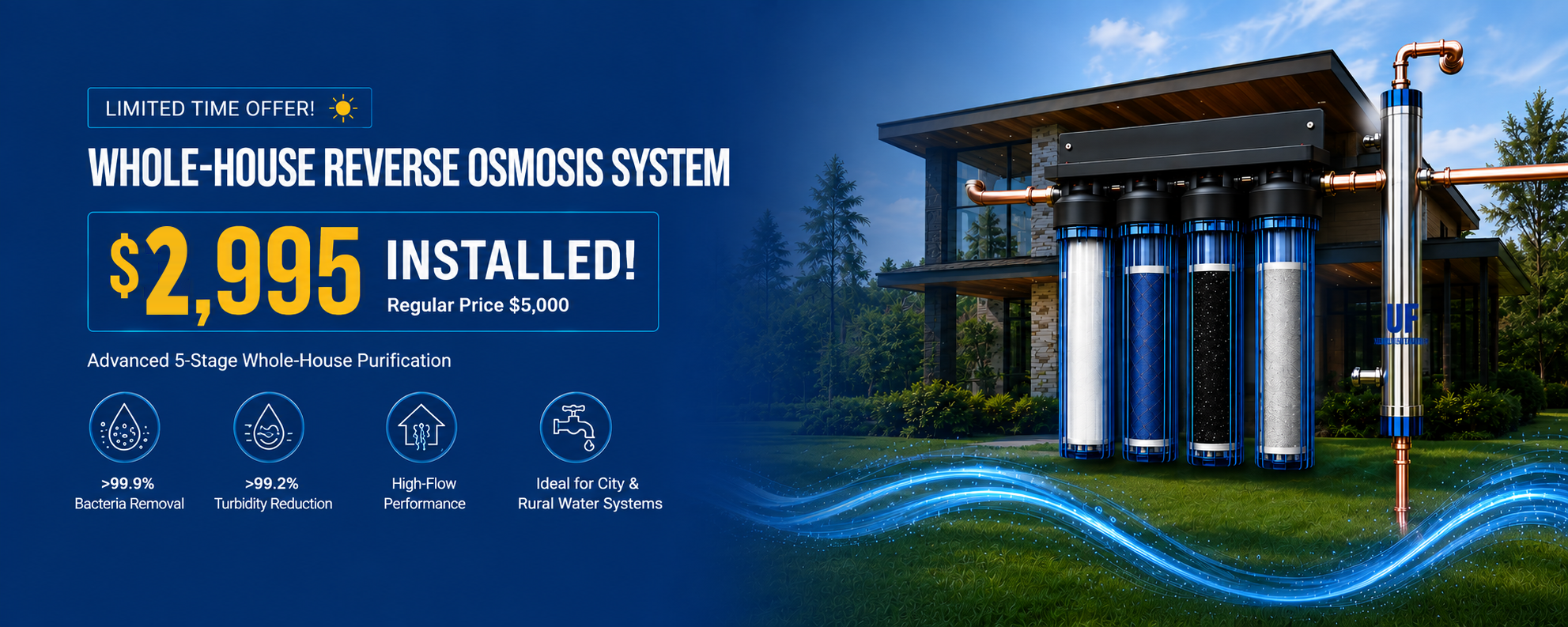
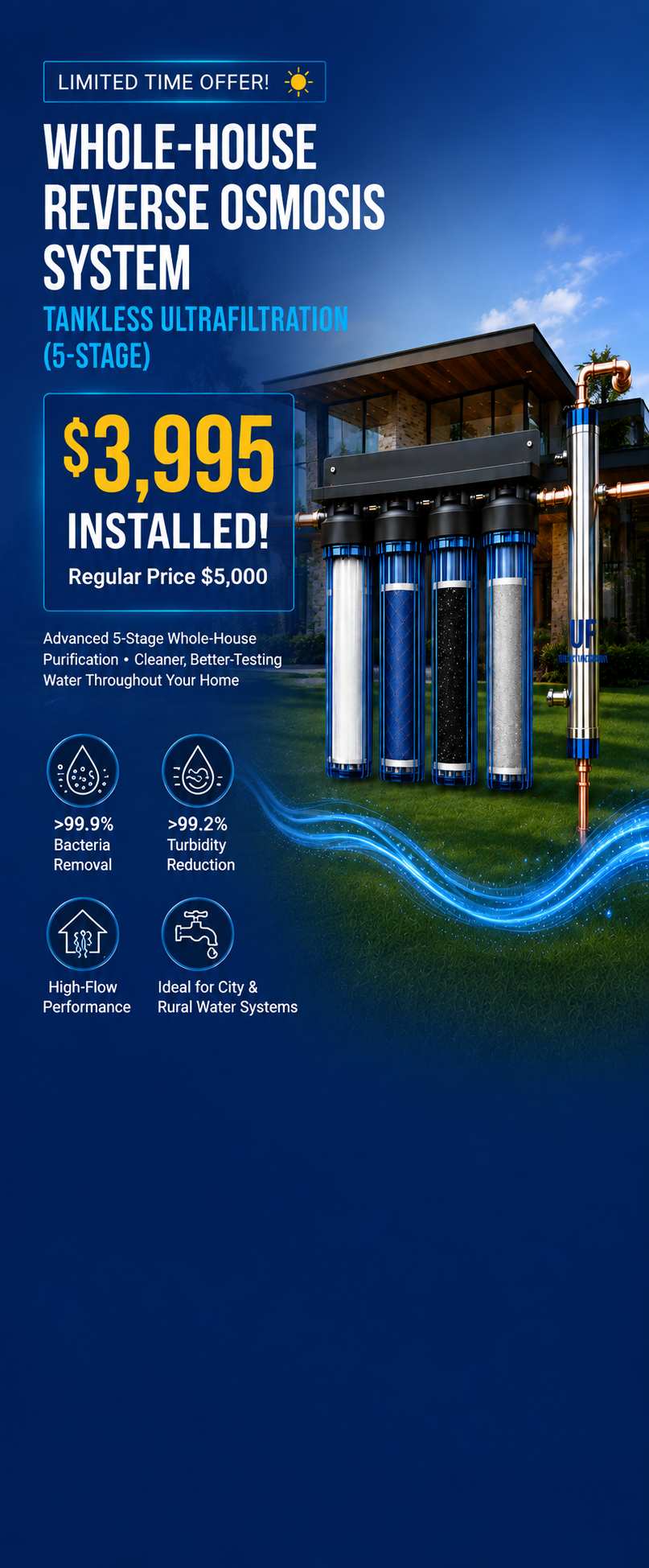
Whole home reverse osmosis systems commonly run several thousand dollars once the tank, pump, plumbing and labor are counted. Our complete whole-house Reactive Osmosis (RO2) system is $2,995 installed - regularly $5,000, so you save $2,005. That price includes the cartridge housings, manifold, membrane vessel, professional installation, a water test and a system check before we leave.
City water or well water - and where we install in Arundel
On municipal supplies the KDF-55 and carbon stages take on chlorine, disinfection byproducts, taste and odor at the main line. On wells—common in Florida communities that rely on groundwater (aquifers)—the 5-micron pre-filter and membrane help handle silt, rust, turbidity and biological contamination. We install whole-house RO-quality systems in Arundel, usually in a single visit.