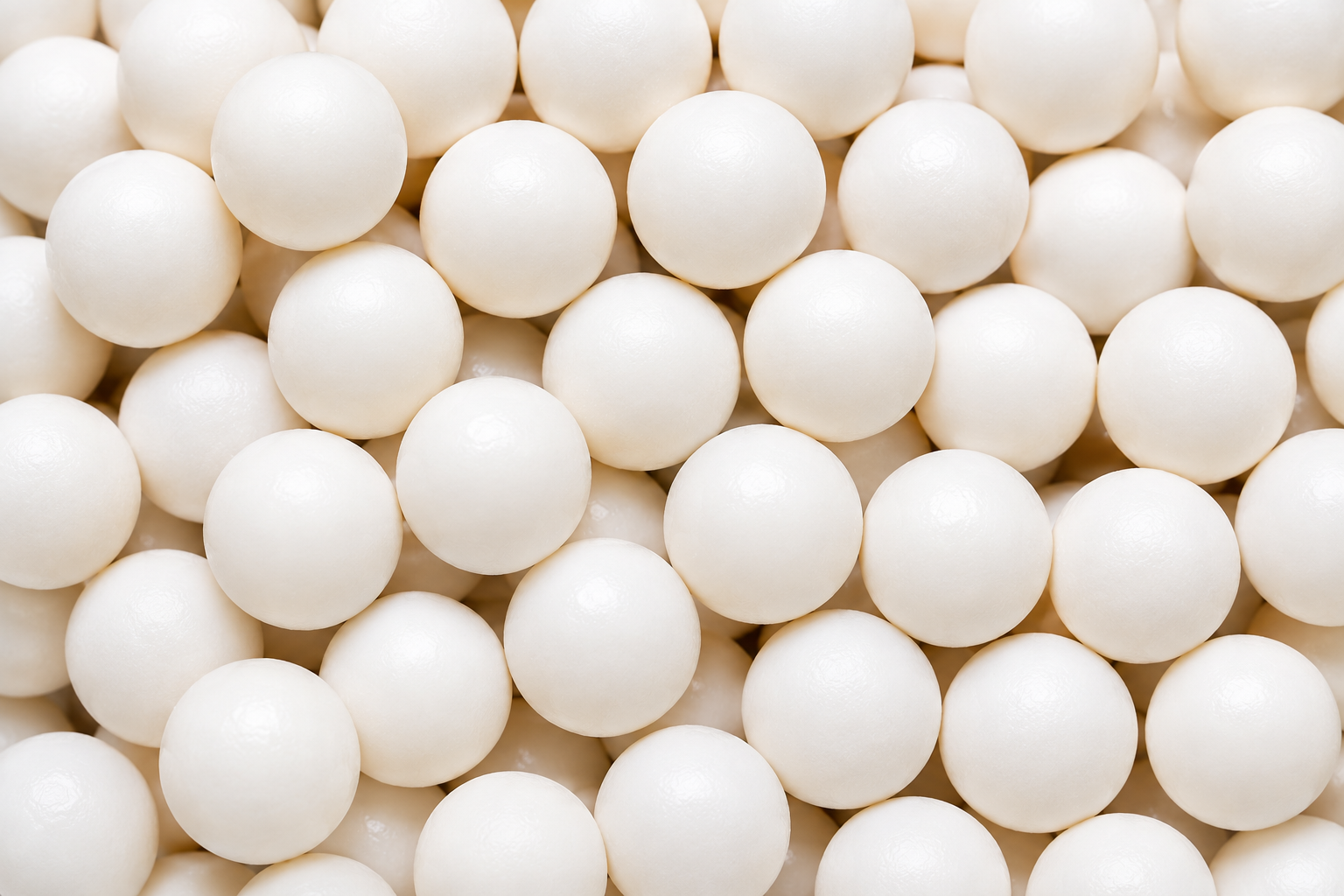
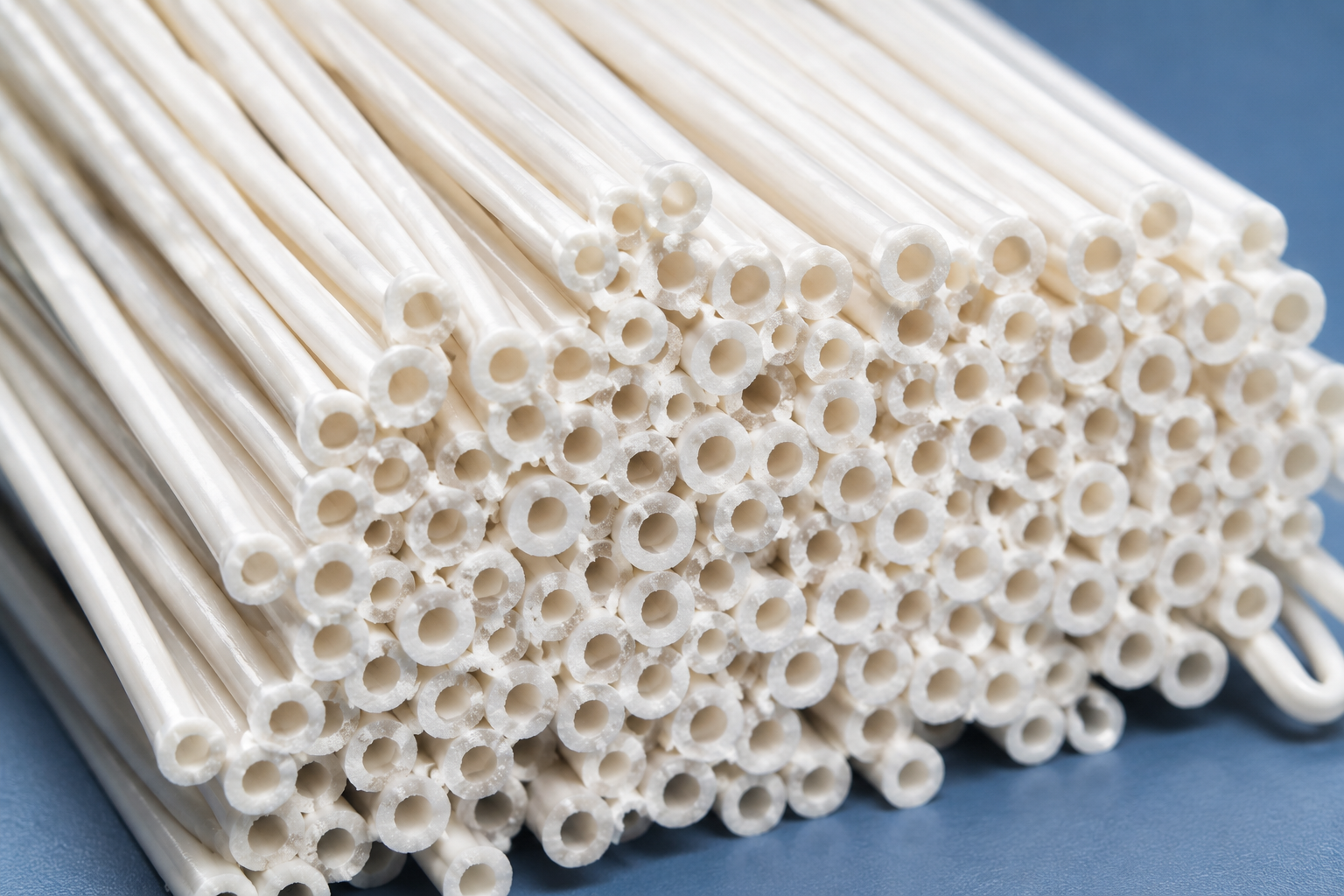
5-Micron Sediment Filter
Pre-Filtration - Polypropylene
Captures larger particles and protects downstream filters and appliances from early clogging.
- Sand
- Silt
- Sediment
- Rust
- Dirt
- Scale
- Turbidity
- Debris
Bottled-water-quality water throughout your whole home—even on remote Garden Key. Advanced whole-house purification down to ≤0.01 microns, with no bulky RO tanks or pumps required.
System Specifications
A hollow-fiber ultrafiltration membrane delivers RO-like performance without a storage tank—so you get full-flow water all day, without giving up precious space on a remote island like Fort Jefferson.
Ultrafiltration pore size
High whole-house flow rate
About a year between changes
Physical barrier, not chemical
Visibly clearer water
Operates perfectly up to
Limited Time Offer
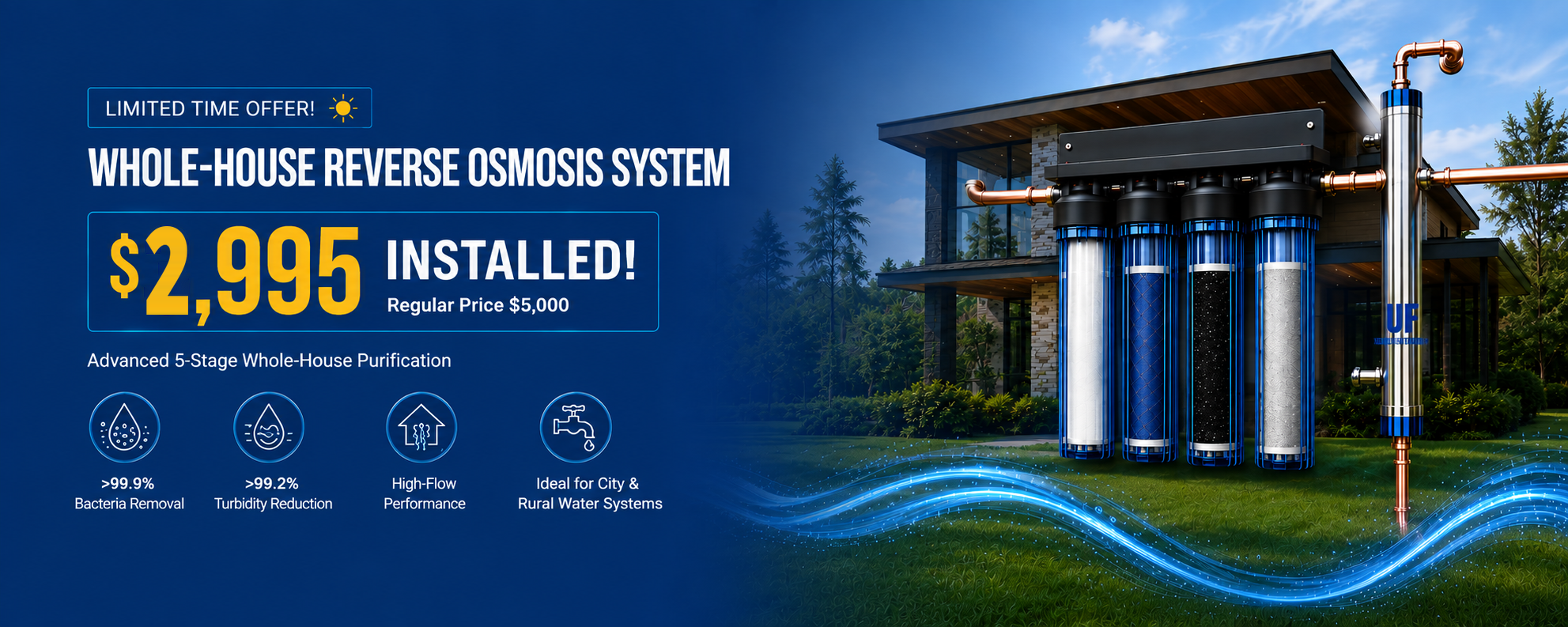
$2,995
Installed
Regularly

Cartridge housings, manifold, UF membrane vessel & all parts.

Mounted, plumbed, and pressure-tested by experienced pros who understand remote island installs.

We test your water and verify flow and pressure before we leave—so it’s ready for island living.

Fully tankless - no storage tank, no waiting for a refill.

We stand behind our work—done right for Fort Jefferson’s remote island conditions.

Treated at the main line, so the whole property benefits at once—great for on-site water systems.
Why This System
Carbon and sediment media reduce what dissolves in your water. A 0.01-micron membrane physically blocks what floats in it—helpful when Fort Jefferson’s potable water is managed on-site.
Ultra-fine filtration blocks contaminants larger than 0.01 microns.
Blocks harmful microbes and microscopic particles—ideal for managed on-site potable water.
Reduces turbidity for cleaner, clearer water—important when potable water is managed on-site.
Activated carbon reduces chlorine, odors, and VOCs for better-tasting Fort Jefferson water.
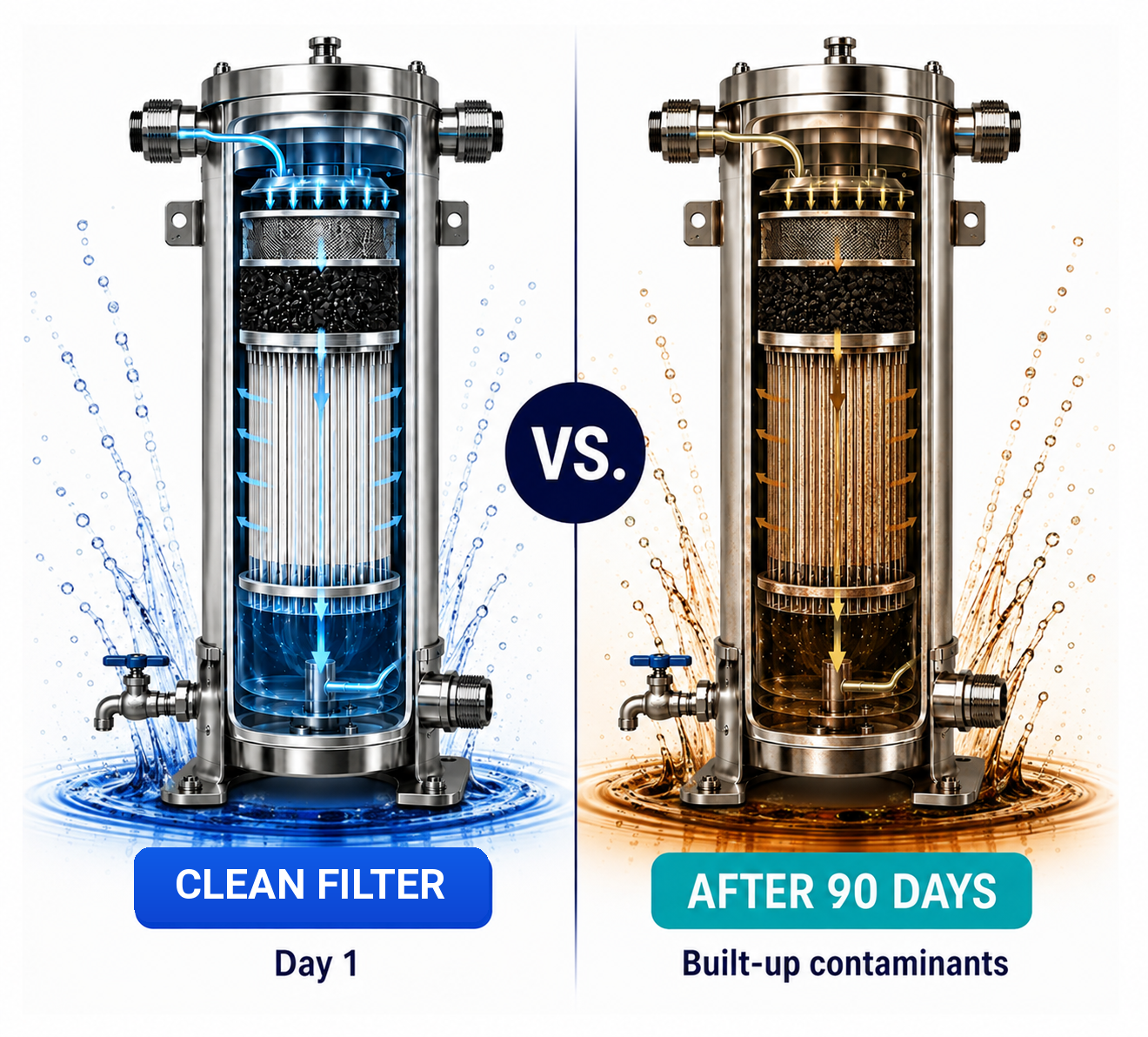
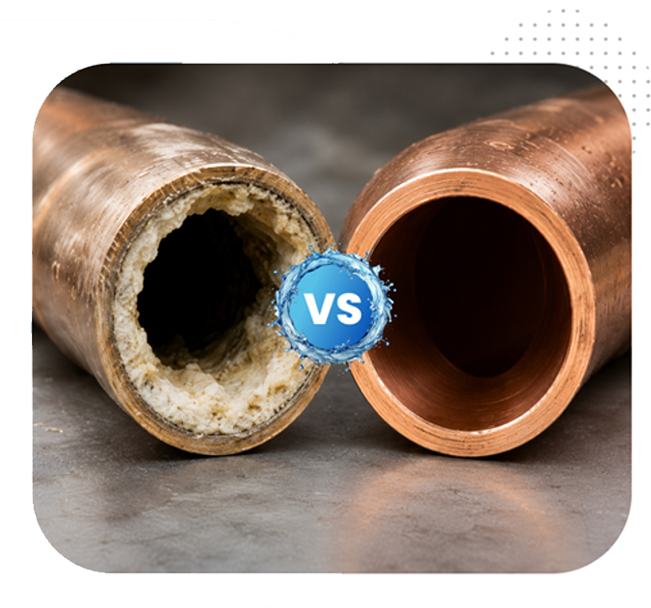
See how quickly trapped contaminants can build up inside your filters—especially with on-site water management.
Blocked by the 0.01 micron membrane
Ultra-fine plastic particles & colloids
Added to most municipal supplies
Adsorbed alongside lead & toxic metals
Lead, mercury, nickel & chromium
Taste, odor & harsh chemicals
Volatile organics & herbicides
The rotten-egg smell in well water
Sand, silt, scale particles & debris
Cloudiness, color and organic growth
Advanced Filtration
Specialized stages in sequence—sediment, KDF-55 redox alloy, fine carbon, and a hollow-fiber ultrafiltration membrane.
Ultrafiltration delivers reverse osmosis quality water to every tap—no storage tank, no brine waste (a smart fit for limited on-site water).
99.99% bacteria removal/reduction by blocking organisms outright rather than inactivating them.
80,000 gallon capacity and long-life media keep maintenance to roughly once a year.
The Multi-Stage Advantage
Pre-Filtration - Polypropylene
Captures larger particles and protects downstream filters and appliances from early clogging.
Copper / Zinc Redox & Bacteriostatic Media
A copper-zinc redox alloy that converts chlorine and precipitates dissolved heavy metals—helping reduce bio-growth inside the housing in Fort Jefferson’s tropical maritime conditions.
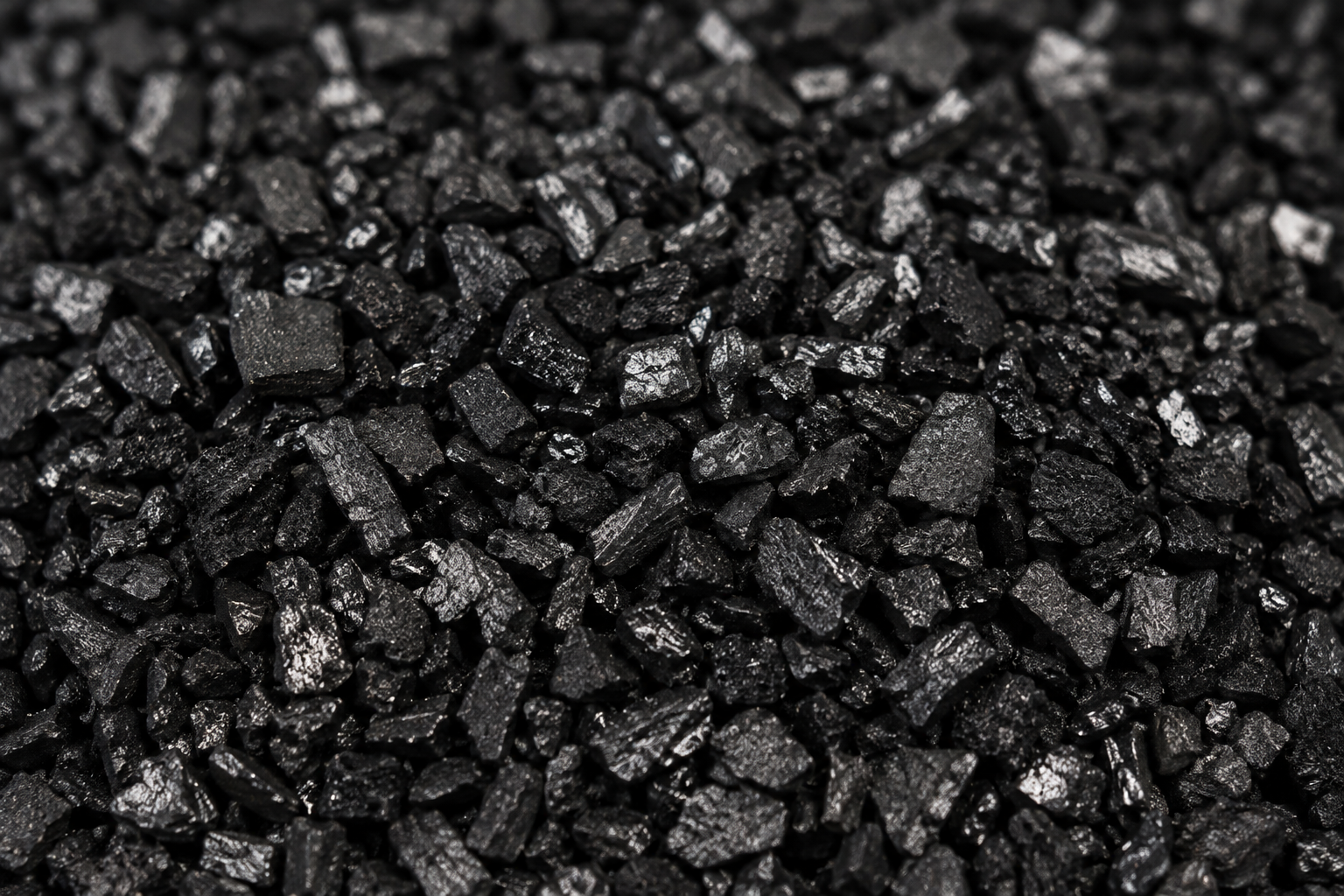
Fine Activated Carbon Block
Fine filtration plus activated carbon adsorption—built to improve taste, odor, color, and chemical reduction for managed island water on Garden Key.
<0.01 Micron Hollow-Fiber Barrier
The final barrier: hollow-fiber bundles with pores under 0.01 microns let water through while holding larger particles out—ideal for Fort Jefferson’s on-site water management.
How It Works
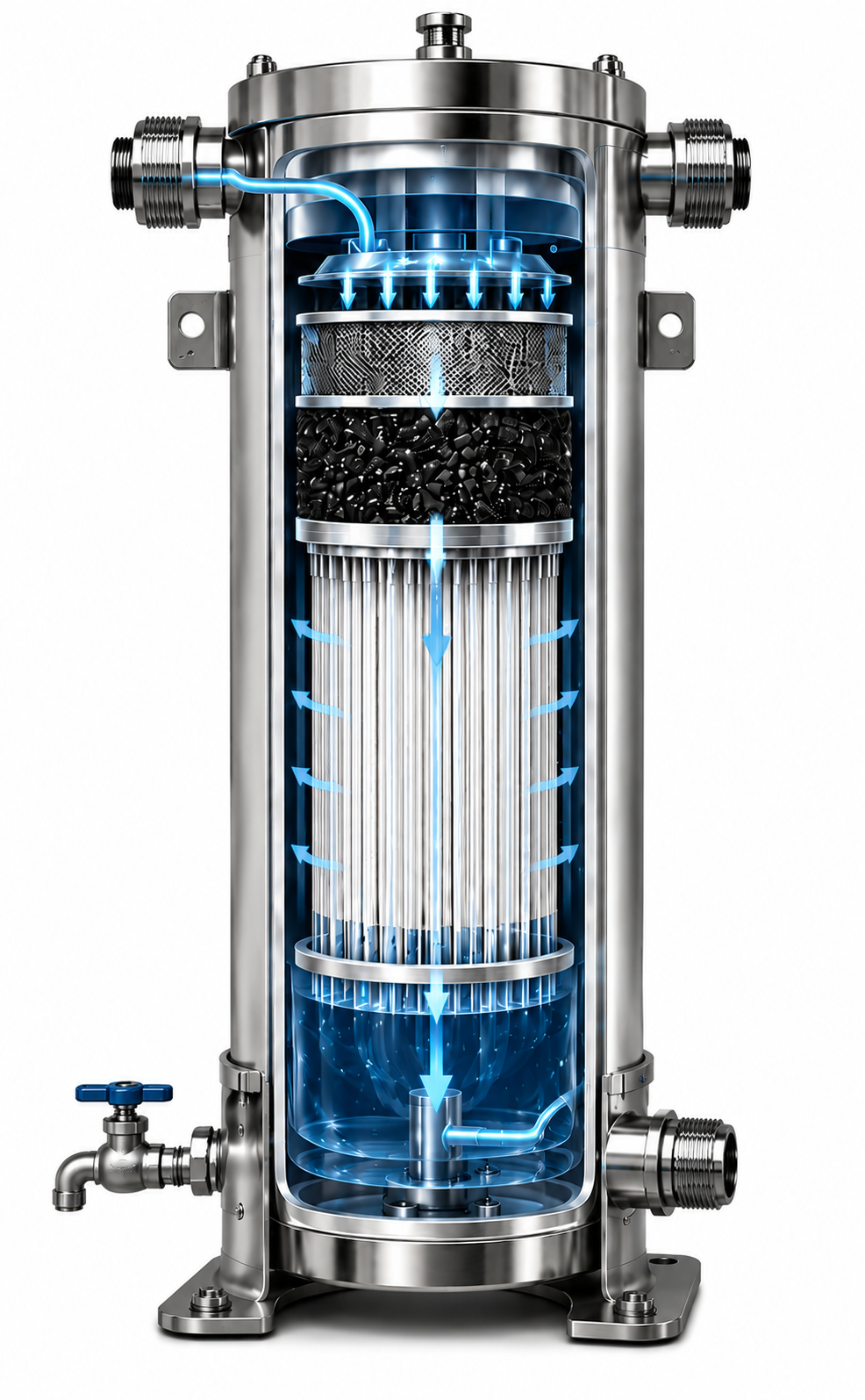
Raw water from the main line enters the inlet manifold at up to 80 PSI.
Sediment, KDF-55, and 0.5-micron carbon work in sequence to reduce particles, metals, and chemicals—helpful for island water systems with marine exposure.
The hollow-fiber membrane holds back what’s left, sending purified water to every tap at 15 GPM.
Engineered for
Whole-Home Protection in Dry Tortugas
Bottled-water quality from every tap—even out in the Dry Tortugas.
High-Flow Capacity
15 gallons per minute keeps showers, laundry and the kitchen running at once.
Engineered for island-ready performance
Uninterrupted flow for the entire home—no “one faucet only” setup.
Helps protect plumbing, appliances & fixtures—important with salty marine exposure.
Cleaner, clearer water for island living at Fort Jefferson.
Premium media for a long service life—even with marine air exposure.
About one service visit per year.
Inside the System
Contaminated water enters the system.
Evenly distributes water across the filtration stages.
Removes sand, rust, silt, and larger particles.
Reduces chlorine, odors, VOCs, and taste issues—ideal for on-site water systems.
Bundles of hollow fibers create a membrane barrier that blocks bacteria, cysts, microplastics, turbidity, and fine suspended solids larger than 0.01 µm.
Collects purified water from the membrane fibers.
Clean, filtered water exits—ready for daily use on Garden Key.
Flushes trapped sediment and backwash debris—ideal for managed, on-site potable water systems.
Regular maintenance and periodic flushing help ensure optimal performance—especially in a tropical maritime climate.
How Reactive Osmosis (RO2) Works
The sediment pre-screen captures sand, rust, silt, and other visible particles.
Activated carbon binds chlorine, VOCs, and odor-causing compounds.
Clean water passes through the hollow fibers; very fine contaminants are retained outside.
Contaminants Reduced
Conventional Whole-House RO
This System - Reactive Osmosis (RO2)
Traditional RO vs. Reactive Osmosis
A traditional whole house reverse osmosis system and a Reactive Osmosis (RO2) system are both after the same result—reverse-osmosis quality water at every tap. In a remote place like Fort Jefferson in the Dry Tortugas, where potable water is limited and managed on-site, how they get there matters for day-to-day use.
Traditional Reverse Osmosis
Reactive Osmosis (RO2)
Reactive Osmosis (RO2) delivers reverse osmosis quality water at every tap without a tank or a pump—ideal for managed potable water on remote Garden Key. It is not a reverse osmosis membrane, so it does not lower dissolved salts or TDS the way a conventional RO system does - what it removes is everything particulate and biological, for the whole house, at full pressure.
Pure water isn’t a luxury in Fort Jefferson. It’s a lifestyle.

Bottled water-quality water on tap,
even in remote Fort Jefferson.

99.99% turbidity removal/reduction means
clearer glasses, ice and bathwater.

99.99% bacteria removal - organisms
are blocked, not just treated.

Carbon-polished water for coffee, tea,
and all your favorite recipes.

Tankless design delivers 15 GPM
with nothing to refill.

80,000 gallon capacity keeps
maintenance down to an annual service.
KDF-55 and 0.5-micron carbon reduce chlorine, disinfection byproducts, taste, and odor at the main line—great for tropical maritime conditions and marine exposure.
The 5-micron pre-filter and the membrane handle silt, rust, turbidity and biological contamination together—helpful in Fort Jefferson’s marine environment.
Installed for Fort Jefferson in the Dry Tortugas (Monroe County)—typically completed in a single visit.
Conventional whole house reverse osmosis has three well-known drawbacks: it needs a storage tank, it needs a booster pump, and it sends a large share of your water down the drain as brine—then delivers it slowly. Reactive Osmosis (RO2) takes a different route to the same result. A hollow-fiber membrane with pores at or under 0.01 microns physically blocks bacteria, cysts, colloids, microplastics and many viruses—contaminants no carbon filter reliably stops—while running tankless at 15 gallons per minute. It's worth being clear about the tradeoff: RO2 is not a reverse osmosis membrane, and it won't lower dissolved salts or TDS the way a true RO system does. What it does remove is everything particulate and biological, which is what most homeowners are actually worried about, and it does it for the whole house at full pressure—without wasting water as brine, a big advantage in Fort Jefferson where potable water is limited and managed on-site.
Whole House Reverse Osmosis for Fort Jefferson (Dry Tortugas)
In Fort Jefferson and the Dry Tortugas, a whole-house reverse osmosis system usually means one goal: bottled-water quality at every tap—not just under the sink. Here’s how whole-home RO works, where it struggles, and why Reactive Osmosis (RO2) is how we install it for remote island conditions.
A whole house reverse osmosis quality system treats water where it enters the building, at the main line, so every fixture is fed purified water—kitchen, bathrooms, laundry, ice maker and outdoor spigots alike. That is the difference between whole home purification and a point-of-use RO unit, which purifies a single faucet and leaves the rest of the property on untreated water—an important distinction in Fort Jefferson where potable water is typically limited and managed on-site.
A true reverse osmosis membrane produces water slowly and under pressure, so a whole house RO system has to bank it: a large pressurized storage tank, a booster pump to refill it, and a brine line that sends a significant share of your incoming water to the drain. On a remote island like Fort Jefferson—where potable water is typically limited and managed on-site—that waste and extra equipment can be a deal-breaker. Run two showers and the dishwasher at once and you can outrun the tank. The equipment footprint, the wasted water and the pump are the three reasons most homeowners abandon the idea.
Reactive Osmosis reaches reverse osmosis quality water by filtration rather than by pressurized rejection. Multi-stage media—a 5-micron sediment pre-filter, KDF-55 copper-zinc redox alloy and a 0.5-micron carbon block—handle sediment, chlorine, heavy metals, VOCs, taste and odor. A hollow-fiber membrane with pores at or under 0.01 microns then blocks bacteria, cysts, colloids, microplastics and many viruses outright. No storage tank, no booster pump, no brine line, and 15 gallons per minute on demand—ideal for Fort Jefferson’s on-site, limited potable water systems.
Chlorine, chloramine byproducts, hydrogen sulfide, VOCs, pesticides and dissolved heavy metals such as lead, mercury, nickel and chromium are handled by the KDF-55 and carbon stages. Bacteria, cysts, microplastics, turbidity and fine suspended solids are blocked by the membrane. Dissolved salts and TDS are the honest exception—lowering those takes a true RO membrane, which is the tradeoff you make in exchange for losing the tank, the pump and the brine—an especially practical win where potable water is limited and managed on-site, like Fort Jefferson.
Whole home reverse osmosis systems commonly run several thousand dollars once the tank, pump, plumbing and labor are counted. Our complete whole-house Reactive Osmosis (RO2) system is $2,995 installed - regularly $5,000, so you save $2,005. That price includes the cartridge housings, manifold, membrane vessel, professional installation, a water test and a system check before we leave—so you get RO-quality water without the tank, pump, or brine waste that can be tough to justify on a remote island like Fort Jefferson.
On managed on-site supplies, the KDF-55 and carbon stages take on chlorine, disinfection byproducts, taste and odor at the main line. Where sediment is an issue, the 5-micron pre-filter and the membrane handle silt, rust, turbidity and biological contamination together. In Fort Jefferson’s tropical maritime, marine-exposed setting, we also keep an eye on corrosion-prone plumbing and equipment.
Limited Time Offer
$2,995
Installed
Regularly