Most Merritt Island homeowners searching for a whole house reverse osmosis system want one thing: bottled-water quality at every tap, not just under the sink. Here’s how whole-home RO works, where it struggles, and why Reactive Osmosis (RO2) is how we install it.
What is a whole-house reverse osmosis system for Merritt Island?
A whole house reverse osmosis system treats water where it enters the home, at the main line, so every fixture in the house is fed purified water—kitchen, bathrooms, laundry, ice maker and outdoor spigots alike. That’s a big deal for Merritt Island homes, where many properties are on municipal supply from the mainland while others rely on private wells. This is the difference between whole home reverse osmosis and a point-of-use RO unit, which purifies a single faucet and leaves the rest of the house on untreated water.
Why traditional whole house RO is tough for Merritt Island homes
A true reverse osmosis membrane produces water slowly and under pressure, so a whole house RO system has to bank it: a large pressurized storage tank, a booster pump to refill it, and a brine line that sends a significant share of your incoming water to the drain. In Merritt Island—where many homes are on municipal water from the mainland or private wells—this can mean a big footprint in the garage or utility area, plus wasted water. Run two showers and the dishwasher at once and you can outrun the tank. The equipment footprint, the wasted water, and the pump are the three reasons most homeowners abandon the idea.
How Reactive Osmosis (RO2) is different
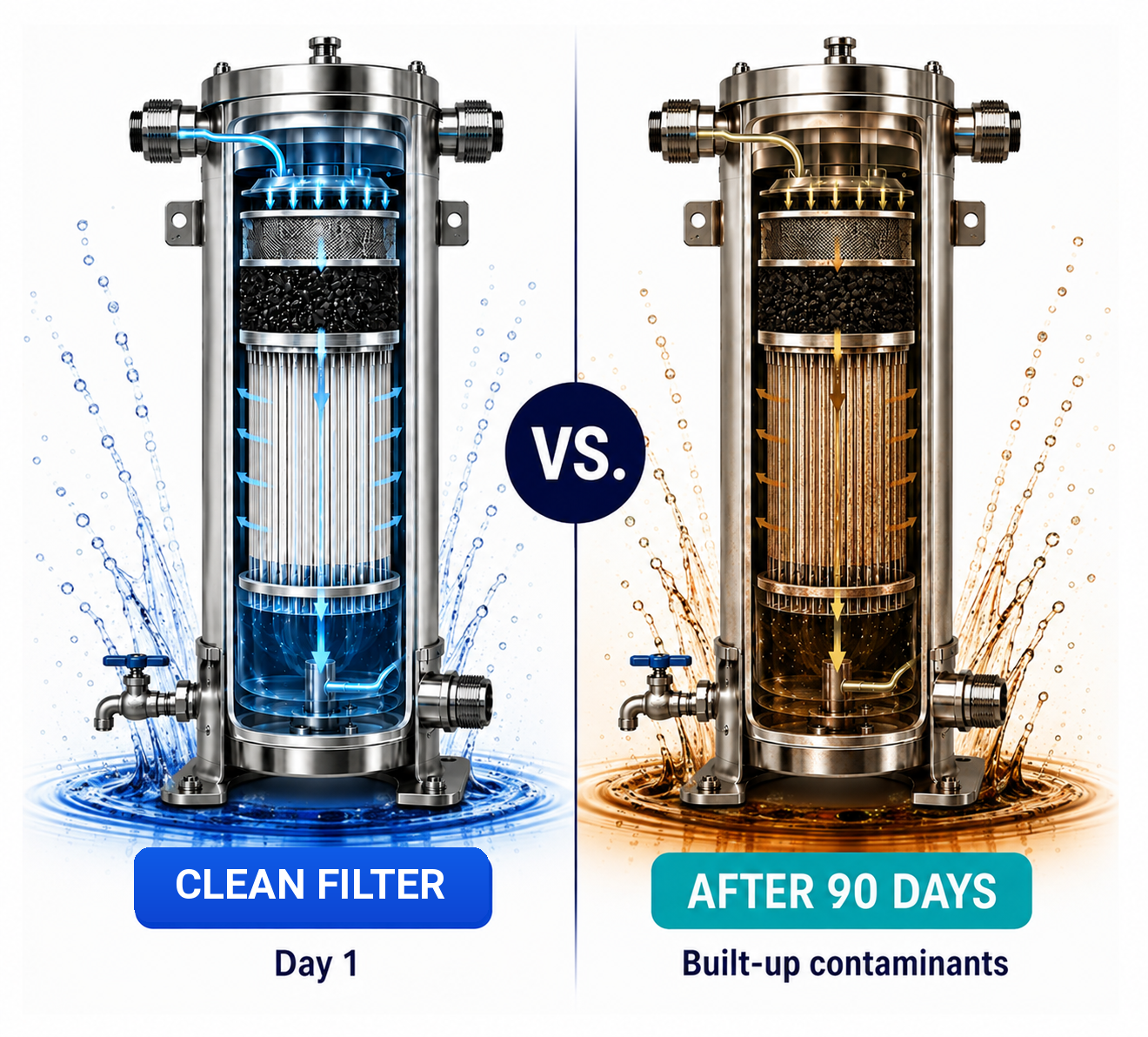
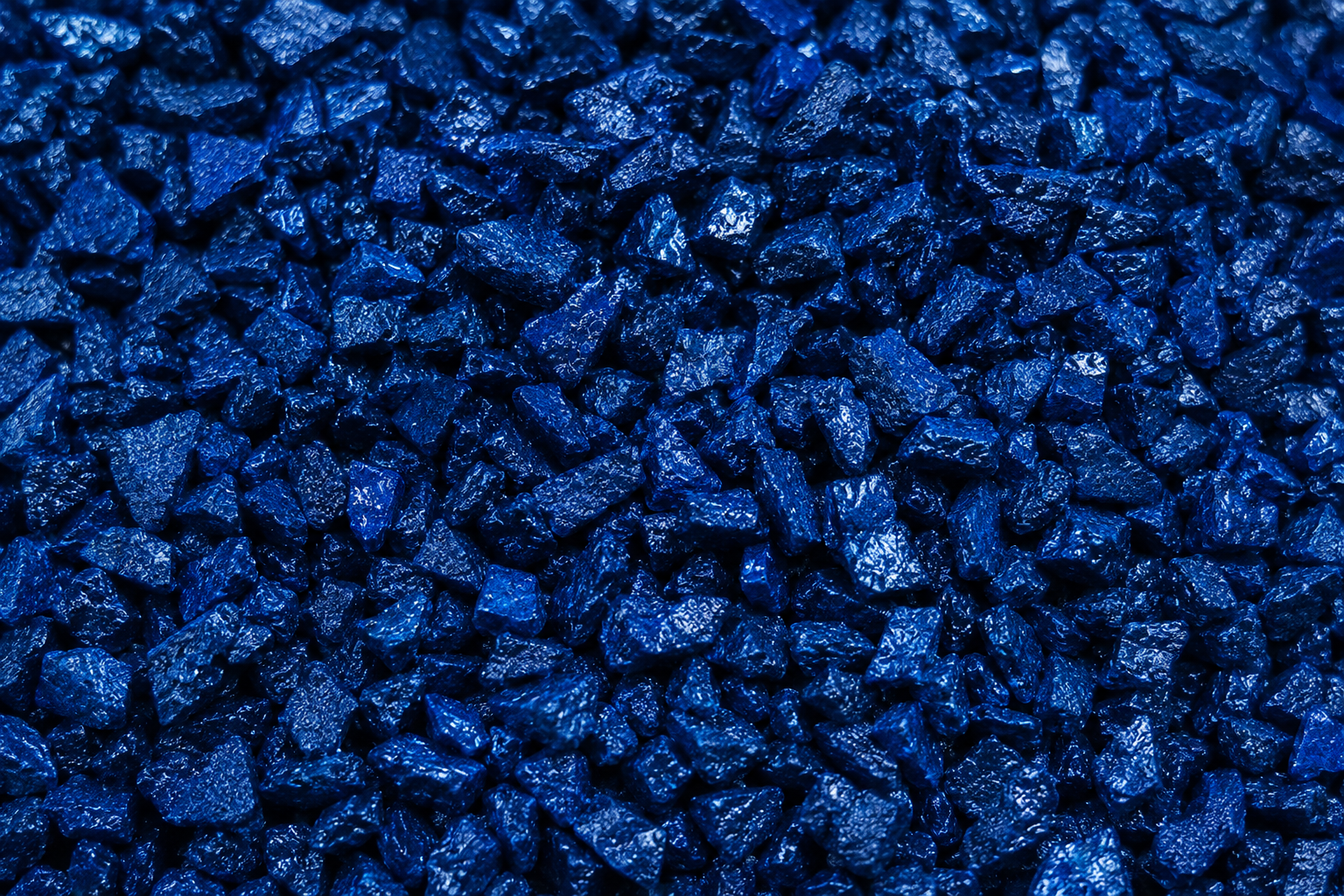
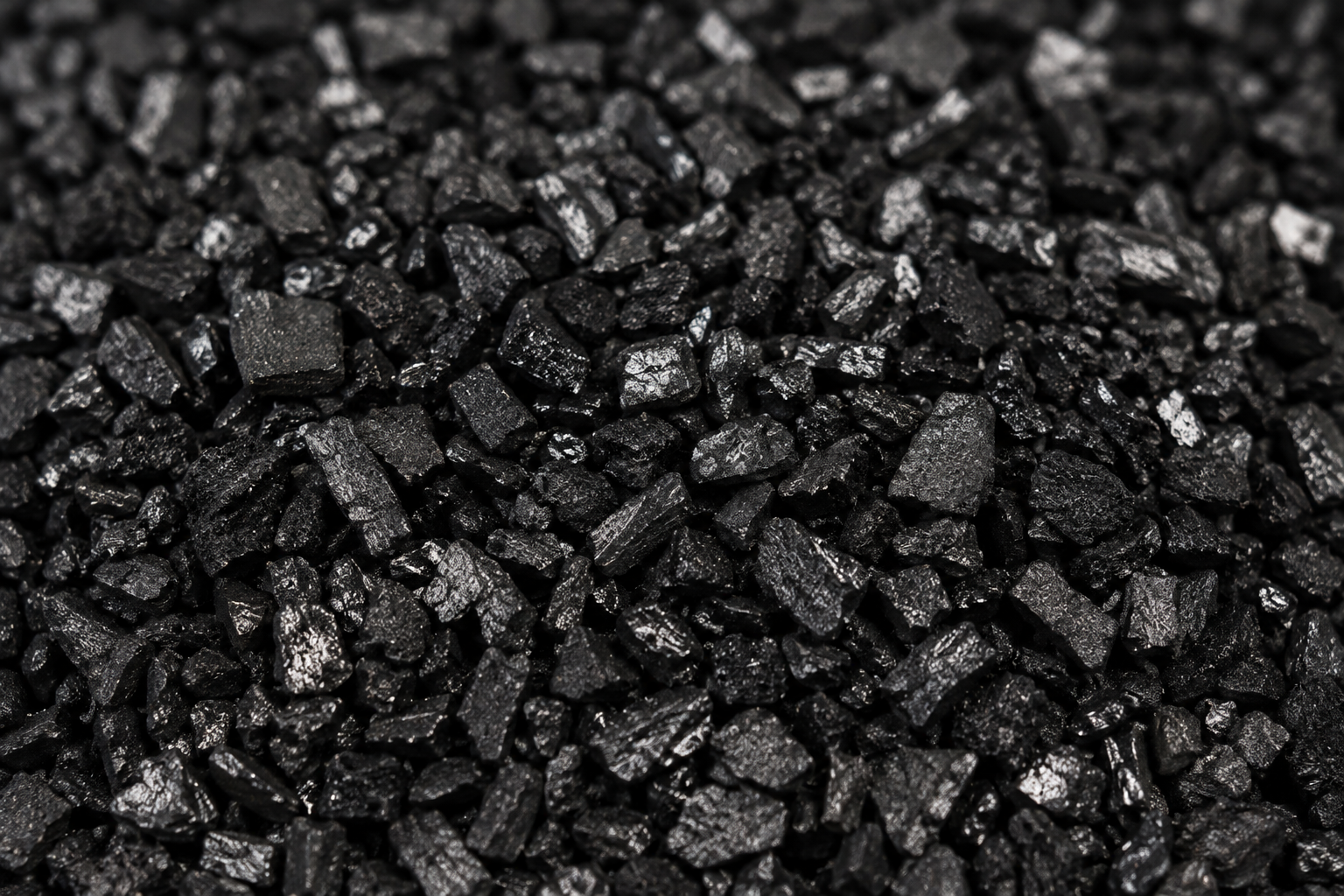
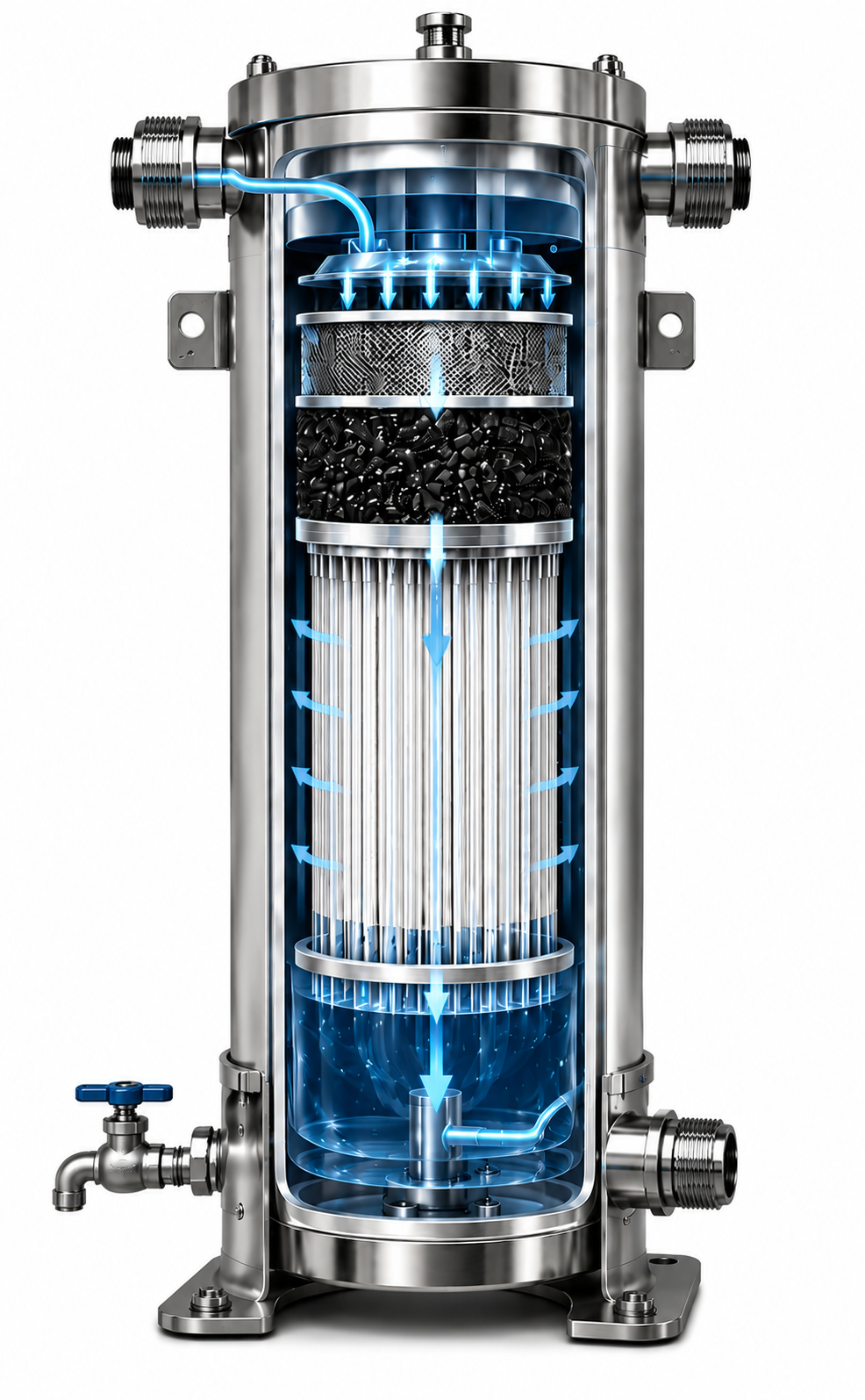
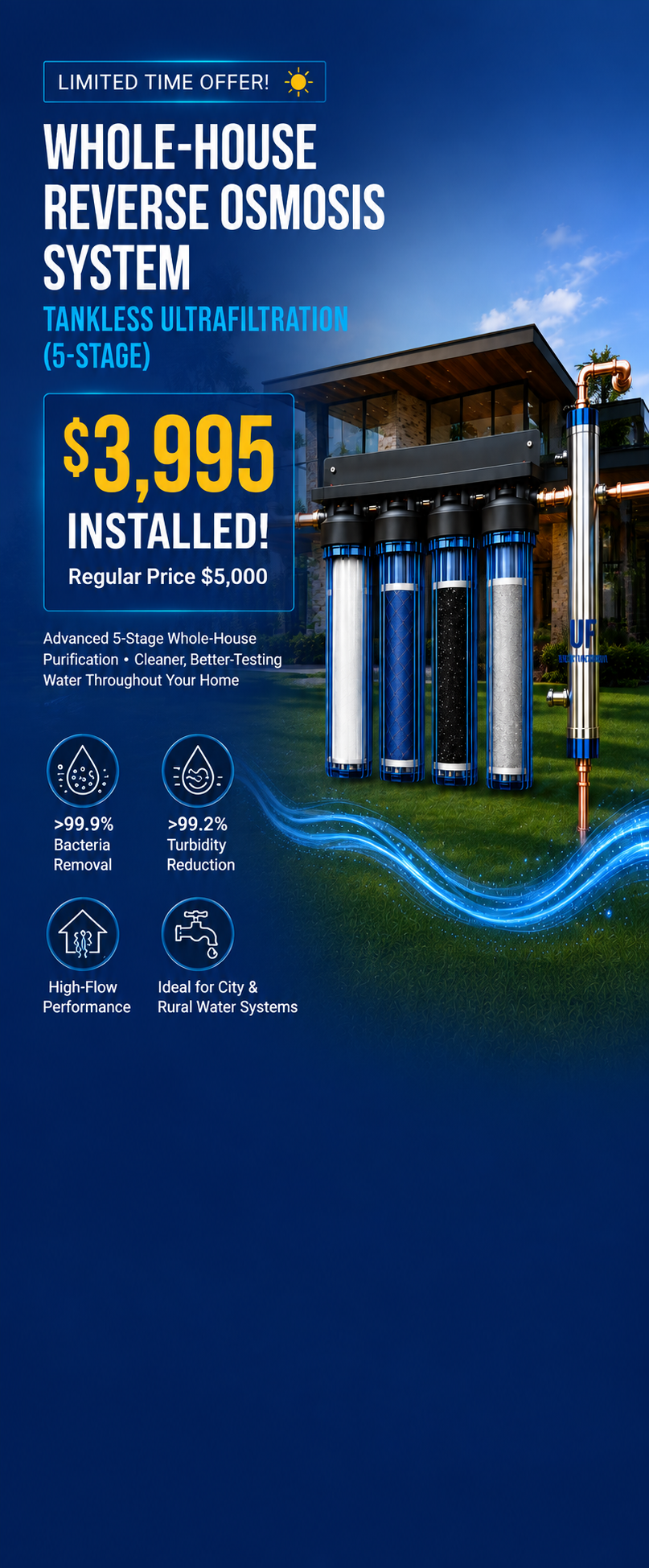
Reactive Osmosis reaches reverse osmosis quality water by filtration rather than by pressurized rejection. Multi-stage media—a 5-micron sediment pre-filter, KDF-55 copper-zinc redox alloy and a 0.5-micron carbon block—handle sediment, chlorine, heavy metals, VOCs, taste and odor. A hollow-fiber membrane with pores at or under 0.01 microns then blocks bacteria, cysts, colloids, microplastics and many viruses outright. No storage tank, no booster pump, no brine line, and 15 gallons per minute on demand—great for Merritt Island’s mix of municipal supply and private well users, including those who notice occasional salty taste/odor near the coast.
Does whole-house RO remove fluoride, chlorine, and heavy metals in Merritt Island water?
Chlorine, chloramine byproducts, hydrogen sulfide, VOCs, pesticides and dissolved heavy metals such as lead, mercury, nickel and chromium are handled by the KDF-55 and carbon stages. Bacteria, cysts, microplastics, turbidity and fine suspended solids are blocked by the membrane. Dissolved salts and TDS are the honest exception—lowering those takes a true RO membrane, which is the tradeoff you make in exchange for losing the tank, the pump and the brine. For some Merritt Island well homes near the coast, that “salty” taste/odor concern can point to dissolved minerals this system won’t reduce.
How much does a whole house reverse osmosis system cost in Merritt Island?
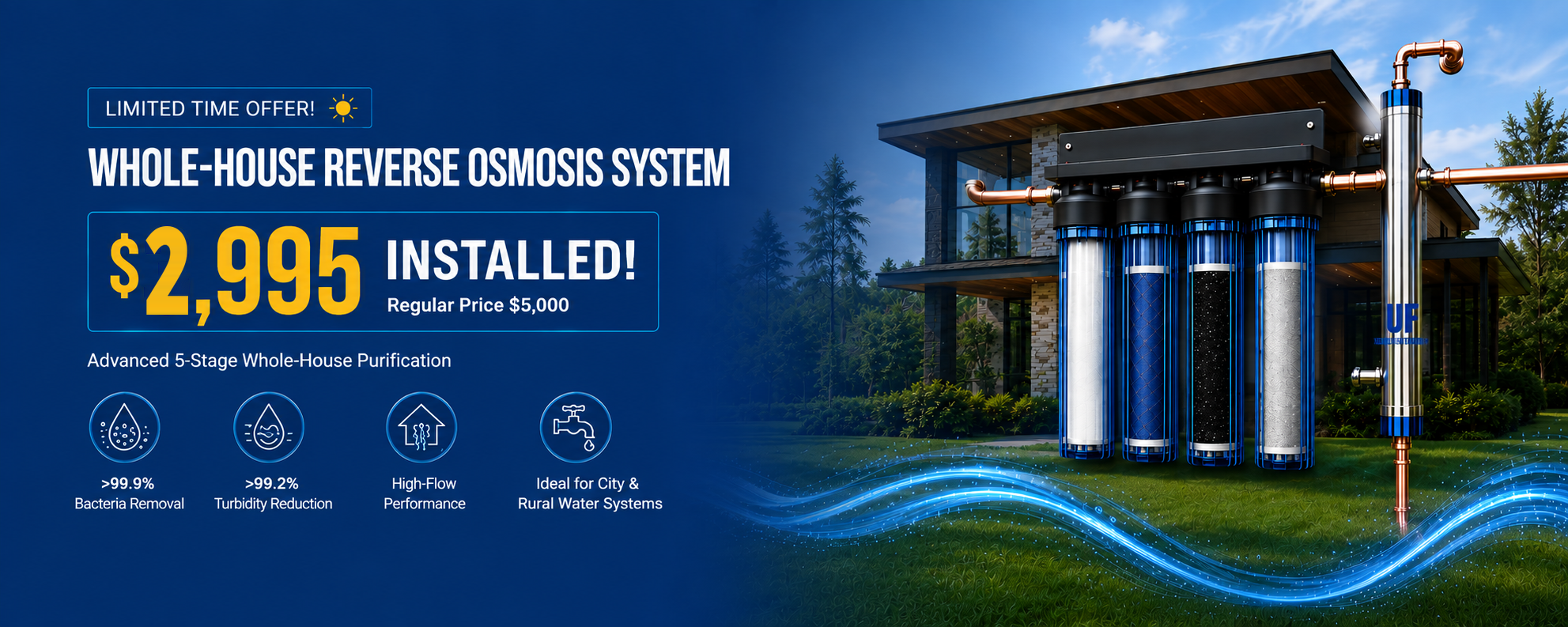
Whole home reverse osmosis systems commonly run several thousand dollars once the tank, pump, plumbing and labor are counted. Our complete whole-house Reactive Osmosis (RO2) system is $2,995 installed - regularly $5,000, so you save $2,005. That price includes the cartridge housings, manifold, membrane vessel, professional installation, a water test and a system check before we leave—right here in Merritt Island (Brevard County).
City water or well water on Merritt Island—where we install
On Merritt Island municipal supplies (often coming from the mainland), the KDF-55 and carbon stages take on chlorine, disinfection byproducts, taste and odor at the main line. On private wells—where coastal proximity can mean higher mineral content and occasional salty taste/odor—the 5-micron pre-filter and membrane handle silt, rust, turbidity and biological contamination together. We install whole house reverse osmosis quality systems across Brevard County’s Space Coast, usually in a single visit.